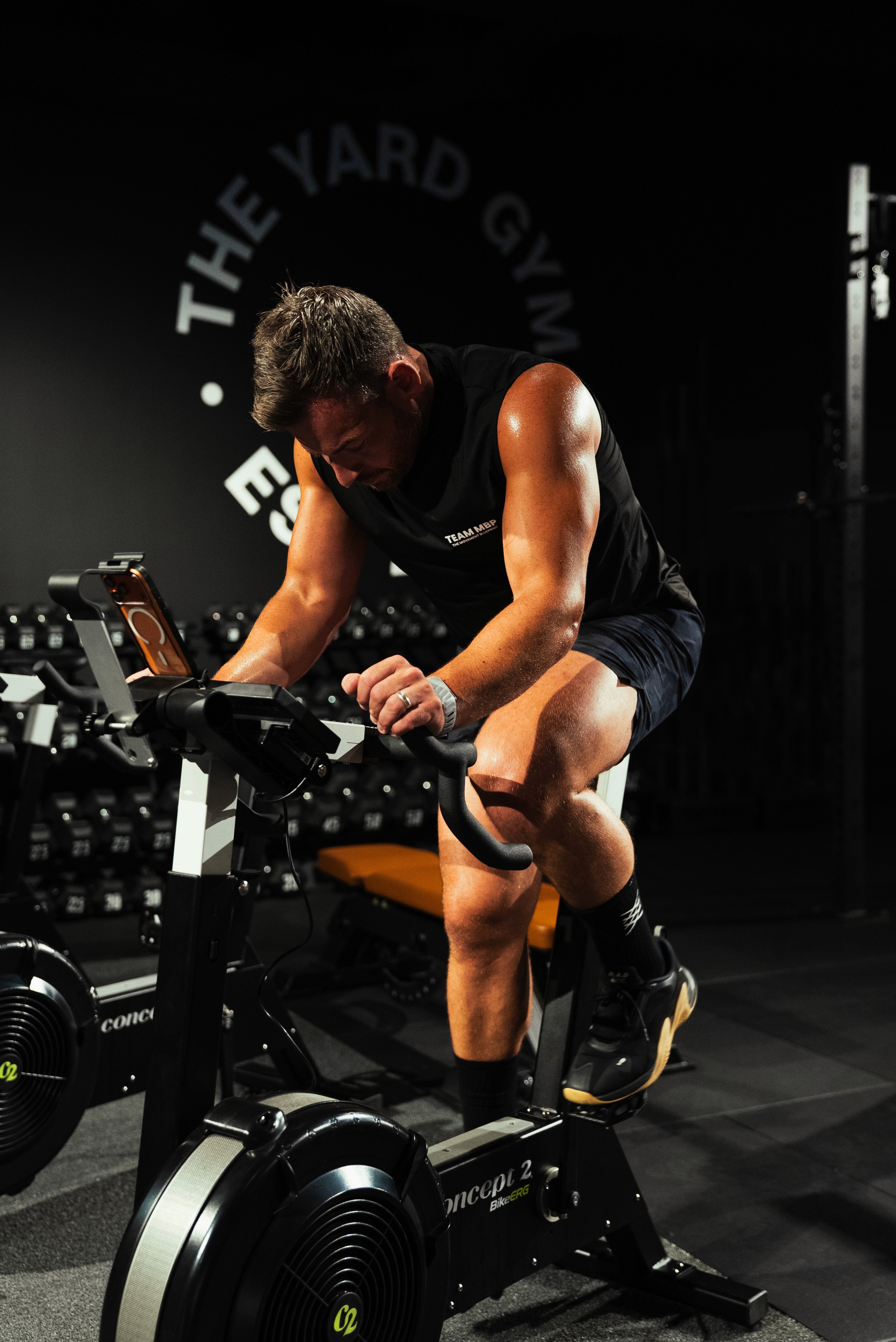
Energy Availability + Carbohydrate Intake
For endurance athletes, adequate energy availability is crucial for many reasons. It helps ensure we can absorb and adapt to all training load, maintain an optimal hormonal profile, have energy to do ‘life’ outside of training, more successfully avoid annoying niggles or injuries, perform nearer to our potential more often, get more consistent and higher quality sleep, and the list goes on… Hopefully you get the picture. Eating enough for you and your needs is bottom line the most optimal thing you can do to impact your rate of progression. Being in an energy deficit will flip all the above factors and lead you down a path you don’t want to be on!
An individuals energy requirements will depend on a few key factors, but the main one to consider will be training volume. If we assume that anyone reading this understands the fact that eating in a deficit to try and lose weight whilst training for endurance sport is a disaster waiting to happen, then we can easily move onto how you can make sure you are meeting your own energy demand. Essentially, as you might expect, the more training you do, the more fuel your body will need to operate at the level you want it to. This will mainly come through the form of carbohydrate, with a natural but slight increase in protein and fat too.
I will get to optimal carbohydrate intake below, as this will make up a large percentage of your overall calorie intake. But it is also important to consume adequate protein to ensure optimal muscle recovery and development from training, and enough fats to ensure hormonal balance, immune function and quality nutrient absorption. Protein intake has been shown to be most effective if consumed at 1.6-2g/kg of bodyweight for endurance athletes, and fats tend to be the ‘rest’ of the calories after both protein and carb needs have been calculated and met for that individual.
It’s true what they say, carbs really are king. Providing your body (the engine) with the fuel it needs to be able to prepare, perform and recover day in day out. Lacking in carbohydrate can often and quickly lead to reduced performance, an increased risk of injury, poor recovery, and an overall increase in fatigue. This stretches beyond just the small window of each day that you train in - they are needed across all hours of all days. The body clock doesn’t reset at midnight, nor does it care about what you have got on tomorrow afternoon. It just cares about having adequate amounts of the right fuel to be able to recover and then go again and again. More recent research suggests that endurance athletes can benefit from having up to, and beyond 6-8g of CHO per kg of bodyweight every single day! That is a lot… For an 80kg male that would be up to 640g of carbs, or 30+ bananas! So yes, I’d imagine you could do with another slice of toast…
Most athletes will vary their training volume depending on where they are at in the year - be that a race block, base building or recovery phase. This in turn means energy demand will vary. It is often found that the easiest and most simple way to approach this is by considering your carbohydrate intake as a ratio of your bodyweight. Below in table 1, you can see a rough guide to carbs per kg of bodyweight depending on training volume.
Training Volume | Recommended Carbohydrate Intake |
≤4 hours/week | 5-6 g/kg |
5-6 hours/week | 6-7 g/kg |
7-10 hours/week | 7-8 g/kg |
11-14 hours/week | 8-9 g/kg |
15-19 hours/week | 9-10 g/kg |
20-24 hours/week | 10-11 g/kg |
≥25 | 11-12 g/kg |
*Table 1 from ‘Rethinking the 60% Carbohydrates Rule’ by Matt Fitzgerald
Meal Timing
Assuming you are both eating enough calories and understand the importance of carbohydrates as an endurance athlete, now we can start being a little more specific with when we eat specific foods/meals throughout the day and around are training.
The benefits of ‘protein timing’ are often spoken about in the world of nutrition. Essentially,consuming your protein at regular intervals of 3-4 hours to maximise muscle protein synthesis. Keep in mind that this is purely ‘optimal’ and often hard for people to achieve every day, hence why it is often followed up with the simple act of ‘getting enough in day to day’ being the most important thing. The same is somewhat true for endurance athletes and their carbohydrate intake, but perhaps with a little more riding on it when it comes to performance in everyday training sessions. We can break this down into our pre/post training needs, and intra training needs.
Pre-exercise:
1–4 g/kg body weight, 1-4hrs before exercise.
For example; an 80kg male might have 1 x bagel (45g CHO) + 1 x banana (25g CHO) + 12g honey (10g CHO) 1 hour before their training session.
Post-exercise (recovery):
1.0-1.2 g/kg/hr of moderate to high glycemic index carbs for 4hr to rapidly replenish glycogen
These numbers will give you the best chance of performing at your highest possible capacity and then recovering as quickly as possible, absorbing the session and being able to go again the next day.
Backing up this protocol with optimal fuelling during your session, will really give you that edge and allow you to maximise your hard work. This is something that takes practice and refinement to optimise, as different products and methods of consumption are favoured by different individuals.
During Exercise (carbs per hour):
<30min: None needed
30-75min: Small amounts or mouth rinse only
1-2hours: 30-60g/hr
2-4hr: 60-90g/hr
>4hr: 90-120+g/hr (requires gut training)
The different methods mentioned will usually come in the form of gels, drink mixes, chews and bars. Although some people will say they prefer ‘whole foods’, it becomes very hard to hit those higher numbers if relying on whole foods alone.
Supplementation
Supplements exist to do exactly that, ‘supplement’ what you are already doing. They are not there as a ‘fix’ to a non-optimal foundation. For example, if your sleep schedule is all over the place, with no consistency and/or structure and endless hours doomscrolling in bed, then taking magnesium or another ‘sleep pill’ is not going to fix it. However, if your sleep is dialled in, you have regular sleep and wake times with minimal phone time and you are looking to elevate the quality, then something like magnesium may be of benefit. The same goes for most areas of life and most supplements - they are there to add a small boost to an already fairly optimal approach, not make up for a lack of intention or quality.
This is a topic, I feel, where personal desire and budget comes into play more than anything else as there are actually very few supplements out there (there are a couple) that have black and white, concrete evidence to show they will have a direct and almost immediate benefit on you and your training.
The supplements I would encourage everyone to take would be;
• Creatine
• Electrolytes
• Caffeine
Beyond this, I feel as though the investment vs reward ratio begins to become a little blurry - unless, like I said before, all your basics are dialled in (sleep, nutrition, training plan and so on). But hey, if you have the spare cash, see what you like and what you feel works for you.
Summary
There are multiple factors that make an optimal fuelling strategy, both during/around your training and in your day-to-day. It must however be considered that stacking the finer details on top of a ‘weak’ foundation may not result in too much benefit. Instead, I encourage you to focus on getting the key pillars right, before jumping too many steps ahead of yourself.
Consuming enough calories to support your training? Cool, now consider the ratio of macros nutrients and ensure carbohydrate and protein needs are being met. From here, you can then dial into meal timing and finally, plug any gaps you might have with supplementation.
It’s a long-term game, and not something you should expect to get perfectly right overnight. It may take multiple iterations and plenty of trial and error, but hopefully each time you refine you will gain more from it and continue on an upward trajectory.
If you need some support, don’t hesitate to reach out to us here at MBP.
Coach Ben