Cross-Training: Changing The Perspective
Cross-training to most is a term that is often linked with injury. You pick up an injury or niggle, are forced off-feet, and have to go elsewhere to try and find a similar stimulus and training effect - be that an elliptical, bike, or similar. Essentially, a form of aerobic exercise without the high impact loading that running brings. But what if we changed the narrative and looked at these as forms of training that can actually help avoid periods of forced rest? Instead of only incorporating them when we physically cannot run, maybe doing so before we get to this stage will largely reduce the chances of ever getting there at all. Simply put, well structured cross-training can improve cardiovascular fitness and boost performance while reducing injury risk by reducing the stress and impact loading on the body.
Lower overall load = more sustainable training = less forced rest = more consistent training = better results.
Cross-Training In Practice: Ultras, HYROX & Road Running
There are multiple angles this can be approached depending on which specific sport you are training for. Ultra running, HYROX, and road racing all have their nuances and demand slightly different approaches for optimal training and results. Cross-training absolutely fits into all of these buckets, but the way in which we use it might differ.
For example, replacing too much of the low intensity volume work with cross-training for an ultra runner might not be the best move. Considering the specific demand of their sport is to spend long periods of time on feet, it will likely be a beneficial to be well practised at this. But with that comes a lot of cumulative load and stress, so hitting some of the high intensity work off-feet might be a better option. This helps keep the overall load on the body more manageable and balanced.
Flip this to a HYROX athlete and things will likely look a lot different. The demand for spending lots of time on feet here are much less, but the demand for efficient high intensity running are much higher - so being well practised at this is important. In this case, replacing too much of the intensity with cross-training might be detrimental to race performance, but lots of off-feet easy volume not so much. This will leave the athlete fresher and in a position to execute their harder running sessions with higher quality, in turn, getting greater adaptations.
A road runner will slot in the middle of the two, as they need to be able to not only run efficiently at fast paces, but also be able to do so for an extended period of time. This means the specific adaptations made in their running sessions are crucial for optimal performance. Cross-training in this instance might be best used to supplement some easy milage and give the athlete more of a chance of full and quality recovery between sessions.
Types Of Cross-Training
Whilst there are many forms of cross-training, what works for one might not be as effective for another. Below is a list of the most popular options:
• Swimming
• Cycling
• Elliptical
• Stair Master
[Some places might consider strength training as cross-training, but as you might expect, for us at MBP that shouldn’t replace anything. It should be a key part of your training week]
These options come with varying levels of load/stress, meaning both the rate of recovery and energy demand may also differ. Below I will briefly discuss each option.
Swimming
Swimming completely offloads the body from impact, resulting in a very fast recovery time [muscularly]. But given the high skill demand, the overall energy demand might actually be much higher than you would expect, especially if you are not a well practised and efficient swimmer. This means it's very important for an athlete to fuel these sessions effectively, and not get caught thinking because it’s less impact, that means it’s less energy expensive. Beyond that, the benefits to runners is mostly in an aerobic capacity, with no ‘run specific’ adaptations.
Cycling
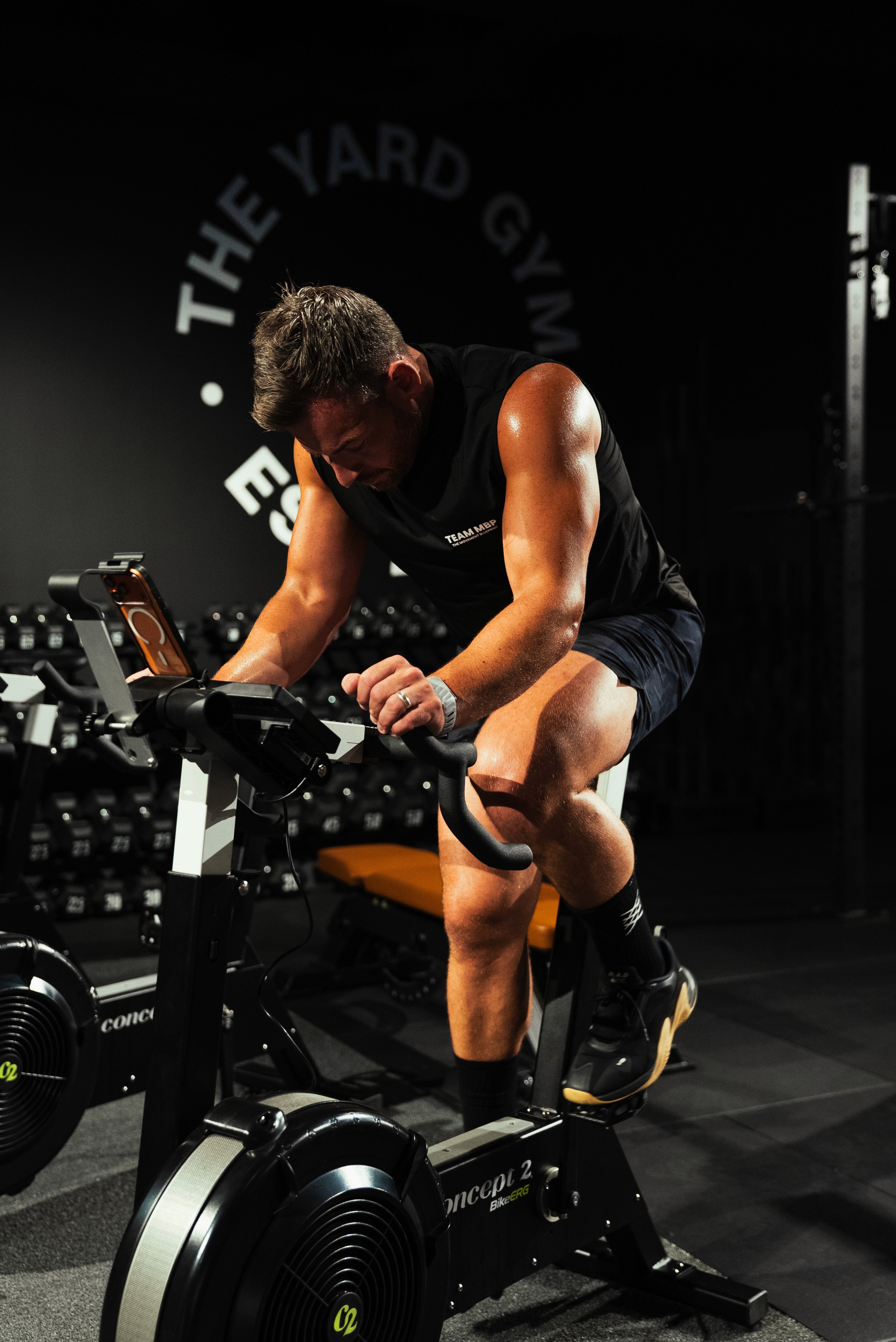
We have much more control over the intensity and energy cost of the work with cycling, no matter the athletes' experience. By controlling the resistance, cadence, and so on, we can easily manage intensity and ensure the work is serving the intended purpose. Cycling can be considered a touch more ‘run specific’, given you are using your legs. It allows you to build good strength in the legs, hold a high heart rate for longer periods with less load on the body, and as mentioned a few times, reduce impact. If looking for a similar adaption as running, cycling can follow a simple 1.5x rule. Meaning that for any session, we should ride for 1.5x the time for a similar stimulus/adaptation. A 1hour run would equal a 1.5hour ride at a similar intensity [this is because running is a more energy expensive movement].
Elliptical
A good option for low impact aerobic work. This can be considered more ’run specific’ given the nature of the movement. However, the benefits maybe don’t quite meet that of the bike when it comes to building strength. Still a good option for those who don’t have access to a bike, or just don’t like cycling.
Stair Master
Probably the most ‘run specific’, but equally the most ‘on feet’ of all the options. Whilst the impact is much less, it will load up the same muscles and structures as running quite significantly. A great tool for ultra runners who need to be more conditioned to lots of climbing, but equally great for road runners and HYROX athletes who want/need some good strength adaptation and lighter forces through the body.
Cross-Training: Key Considerations
An important factor here is that there is no real right or wrong [unless the athlete is injured and some options are forced off the table]. The main factor to control, as ever, is volume and intensity. And despite it being off-feet, not getting carried away and in turn compromising rate of recovery.
So perhaps cross-training is something worth considering, especially if you are someone who struggles with repeat niggles and finds it tough to string together longer periods of consistent training as a result. One aspect I have not mentioned, which is very important for most, is which you enjoy the most. Some people would not be able to fathom the idea of riding a bike on the roads, whilst others wouldn’t go near a swimming pool - purely for the complete lack of enjoyment.
It is important that we keep training fun and engaging, so choosing an option for your cross-training that will allow that is important, and will likely only lead to better results. If you have no idea where to start, please don’t hesitate to reach out to us here at MBP, we’d be happy to help.
Happy training!
Coach Ben